Automobile Engineering division
About the Program
Automobile or Automotive Engineering has gained recognition and importance ever since motor vehicles capable of transporting passengers have been in vogue. Now due to the rapid growth of auto component manufacturers and automobile industries, there is a great demand for Automobile Engineers throughout the world especially after India has opened investors globally. The SCTCE was the first college in the state to offer an undergraduate program in Mechanical (Automobile) Engineering right from the inspection of the institute in the year 1995 initiated by KSRTC and is an NBA accredited course.
This branch deals with designing, developing, manufacturing, testing, repairing, and servicing automobiles such as cars, trucks, motorcycles, scooters, etc & the related sub-Engineering systems including conventional, alternate fuel, and Electric vehicles. For the perfect blend of manufacturing and designing automobiles, Automobile Engineering uses the features of different elements of Engineering such as mechanical, electrical, electronic, software and safety engineering. mechanical, electrical, electronic, software and safety engineering. To become a proficient automobile engineer, specialized training is essential and it is a profession, which requires a lot of hard work, dedication, determination, and commitment. The major task of an Automobile Engineer is the designing, developing, manufacturing, and testing of vehicles from the concept stage to the production stage. Now being in the silver jubilee year of this course, we have our proud alumni working with almost all automobile Engineering industries, administrative services, and Universities across the globe. Now, as per the recommendation of the NBA evaluation team, a separate division for Automobile Engineering is being formed under the Department of Mechanical Engineering Department.
Vision:
To become a centre of excellence in Automobile Engineering which is renowned for producing engineers capable of meeting local and global challenges and committed to socio-economic progress
Mission:
- M1: Impart fundamental knowledge and practical skills in areas related to Automobile Engineering.
- M2: Create an atmosphere for innovative thinking, encourage research and development in the field of Automobile Engineering.
- M3: Maintain active interaction with industries for being aware of current technologies and problems and offer solutions through consultancy and technology development.
- M4: Inculcate social, ethical and environmental responsibilities in students.
PEOs of B.Tech Mechanical (Automobile) Engineering
- 1. Apply the knowledge of Mechanical and Automobile Engineering to innovate, design, manufacture and evaluate vehicles
- 2. Be able to use the latest design, analysis and evaluation tools and protocols and offer solutions to make automobiles that are safe and environment friendly.
- 3. Understand and appreciate the interdisciplinary nature of Automobile Engineering and be able to function as a leader / team member of multifaceted groups
- 4. . Maintain sensitivity to safety, sustainability and professional ethics.
PSOs of B.Tech Mechanical (Automobile) Engineering
- 1. Apply knowledge on mechanical engineering, design, electronics, safety systems and manufacturing to build better automobiles for the future
- 2. Evaluate different automobile systems for optimizing their performance and minimizing field problems
- 3. Be aware of current developments and state of the art technologies in different fields related to automotive engineering.
Laboratories
1) Computer Aided Design and Drafting Lab (CADD Lab)
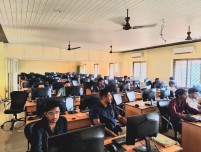
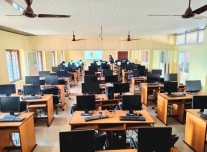
This lab features 36 desktop computers connected via a common network. It introduces first-year students to engineering graphics using industry-standard software such as AutoCAD, Inventor, and PRO-E (Creo). The facility is also extensively used for final-year project work by B.Tech students in Mechanical Engineering and Mechanical (Automobile) Engineering.
2) Computer Aided Design and Analysis Lab (CADA Lab)
Equipped with 36 desktop computers on the same network, this lab supports design and drafting for third-semester students, as well as advanced design analysis for sixth-semester students in Mechanical and Mechanical (Automobile) Engineering. Licensed software includes Inventor, Pro-E (Creo), and ANSYS Workbench (all with 50-user perpetual licenses).
3) Computer Programming Lab
This lab houses 40 desktop computers on a shared network, primarily dedicated to programming practice for second-semester students in Mechanical and Mechanical (Automobile) Engineering.
4) Vehicle Systems Lab
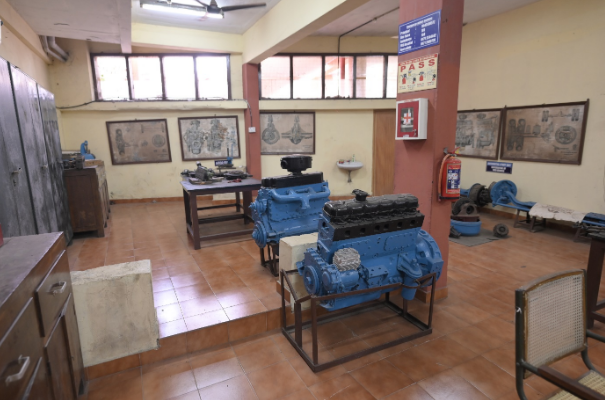
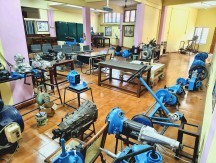
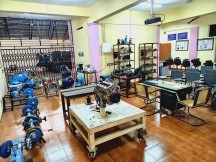
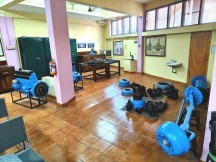
Students gain practical exposure to core automobile systems in this lab. It features modern MPFI (Hyundai i10) and CRDI (Lancer) vehicles to explore sensors and actuators in contemporary engines. Full sets of engine, chassis, and transmission components enable hands-on dismantling, adjustment, and reassembly as per the latest KTU syllabus. Highlights include two fully built Ashok Leyland chassis, diesel and petrol engines, differential, transaxle, clutch, gearbox, front/rear axles, steering gearbox, and more.
The department is among the select few in India partnered with BMW's SkillNext program, which donated a complete engine and powertrain. Hyundai contributed an export-quality, fully loaded i10 for training. SCTCE was the first institute in Kerala to collaborate with Mahindra & Mahindra Pride School (Nandi Foundation CSR), delivering multiple batches of training and placements for underprivileged ITI/Diploma/B.Tech Automobile candidates, with many securing roles in OEM companies.
5) Autotronics and Vehicle Testing Lab
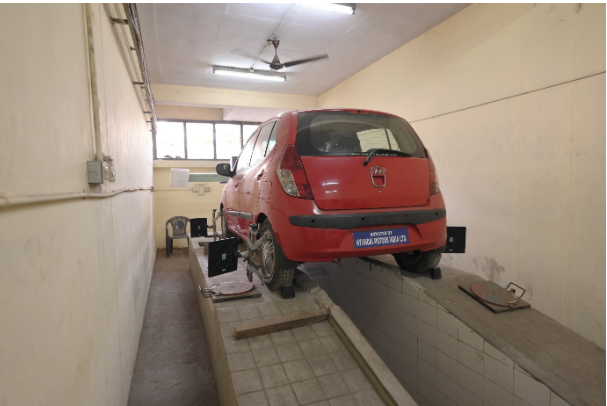
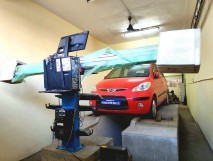
Introduced under the KTU 2019 scheme, this advanced lab covers mechatronics and modern automotive diagnostics. Students gain hands-on experience with electronic engine management systems using equipment such as chassis dynamometer, Euro VI-compliant universal ECU scan tool, computerized wheel alignment machine, wheel balancer, portable five-gas exhaust analyzer, brake tester, auto electrical testing tools, electronic injector test bench, headlight aligner, decibel meter, Orsat apparatus, FIP calibration machine, and more. Additional fabrication machines support project work and final-year assignments.
6) Vehicle Reconditioning Lab
Focused on vehicle servicing and reconditioning, this lab includes wheel alignment equipment, line boring machines, crankshaft grinding machines, brake drum skimming machines, valve refacing/seat cutting/grinding machines, cylinder reboring machines, fuel injection pump calibrator, automatic tyre changer, spark plug testing/cleaning equipment, growler, neon timing light, dwell tester, and other auto electrical tools.
7) Automobile Engine & Vehicle Testing Lab
This lab provides essential testing equipment for engine and vehicle maintenance, including chassis dynamometers, portable exhaust gas analyzers, Orsat apparatus, dial-type spring testers, compression gauges, and vacuum gauges.
8) Automotive Chassis Lab
Dedicated to chassis components, the lab offers practical dismantling and assembly practice with two fully built Ashok Leyland chassis, diesel/petrol engines, differential, clutch, gearbox, front axle, rear axle housing, steering gearbox, and related systems.
9) Heat Engines Lab
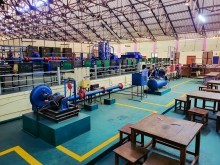
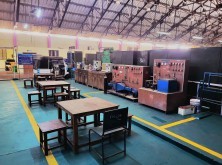
The Heat Engines, Compressors, Blowers, and Heat Transfer Laboratory offers comprehensive practical exposure to internal combustion engines, fluid machinery, and thermal engineering. Equipment includes CRDI engine, single-cylinder petrol and diesel engines for performance, combustion, and efficiency studies; air compressors and blowers for pressure, flow, and power analysis; heat transfer setups for conduction, convection, radiation, and heat exchangers; plus Redwood viscometer and Flash/Fire Point apparatus for fuel/lubricant evaluation. Students bridge theory and practice in engines, fluid flow, and heat transfer.
10) Fluid Mechanics and Hydraulic Machines Lab
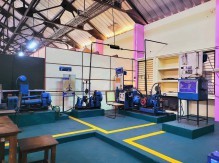
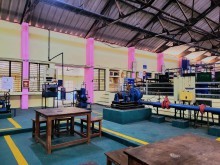
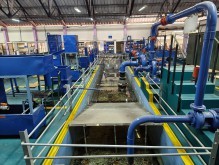
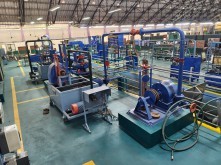
This lab features experimental setups for performance testing of hydraulic machines (turbines, pumps) and flow parameter evaluation, along with plumbing tools for demonstrations. It covers fluid properties, statics, kinematics, dynamics, pipe/nozzle/channel flow, and energy transfer in fluid machinery. Students develop analytical skills for designing, analyzing, and selecting fluid systems in power generation, irrigation, water supply, and industrial applications.
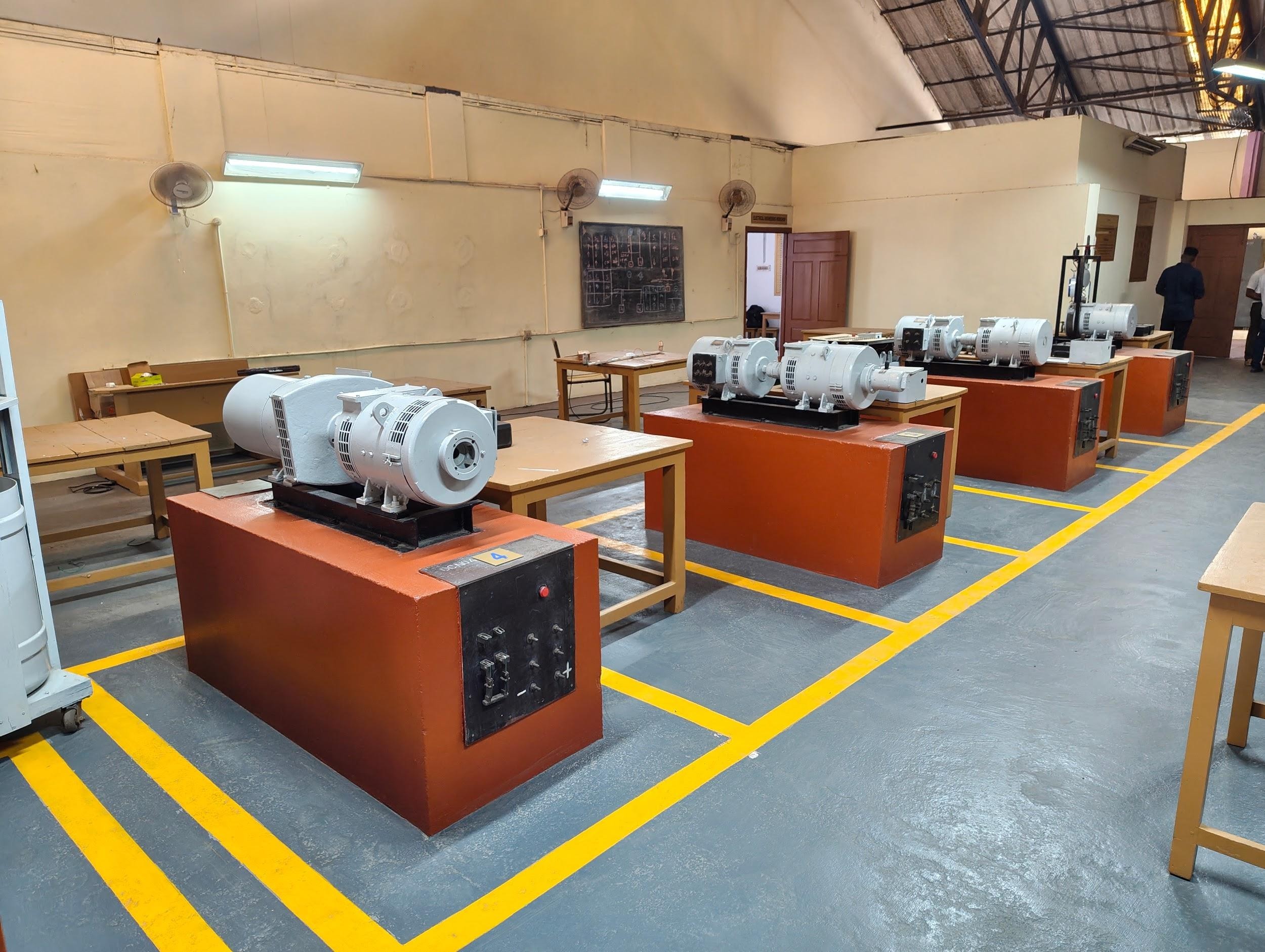
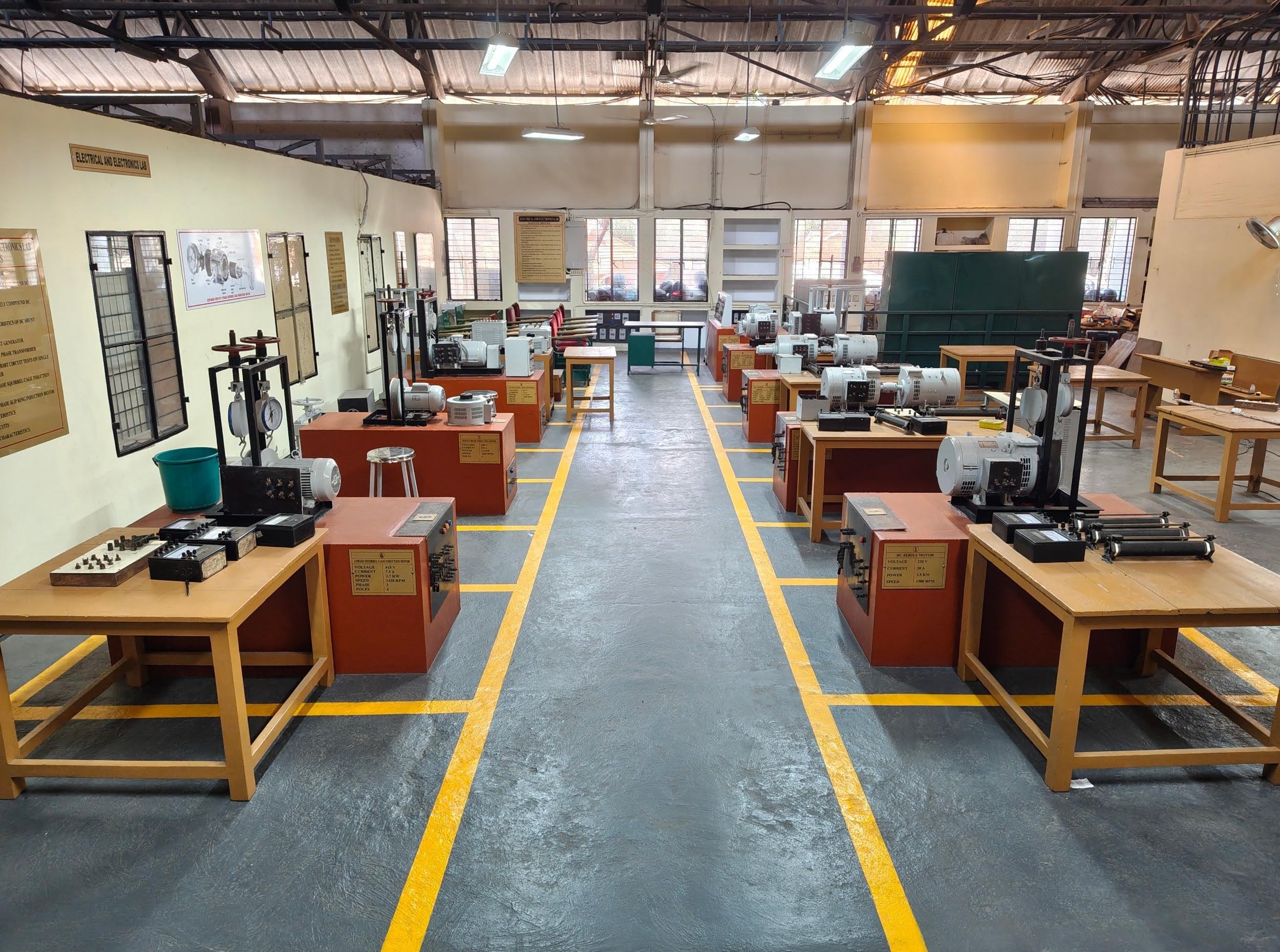
11) Electrical System Lab
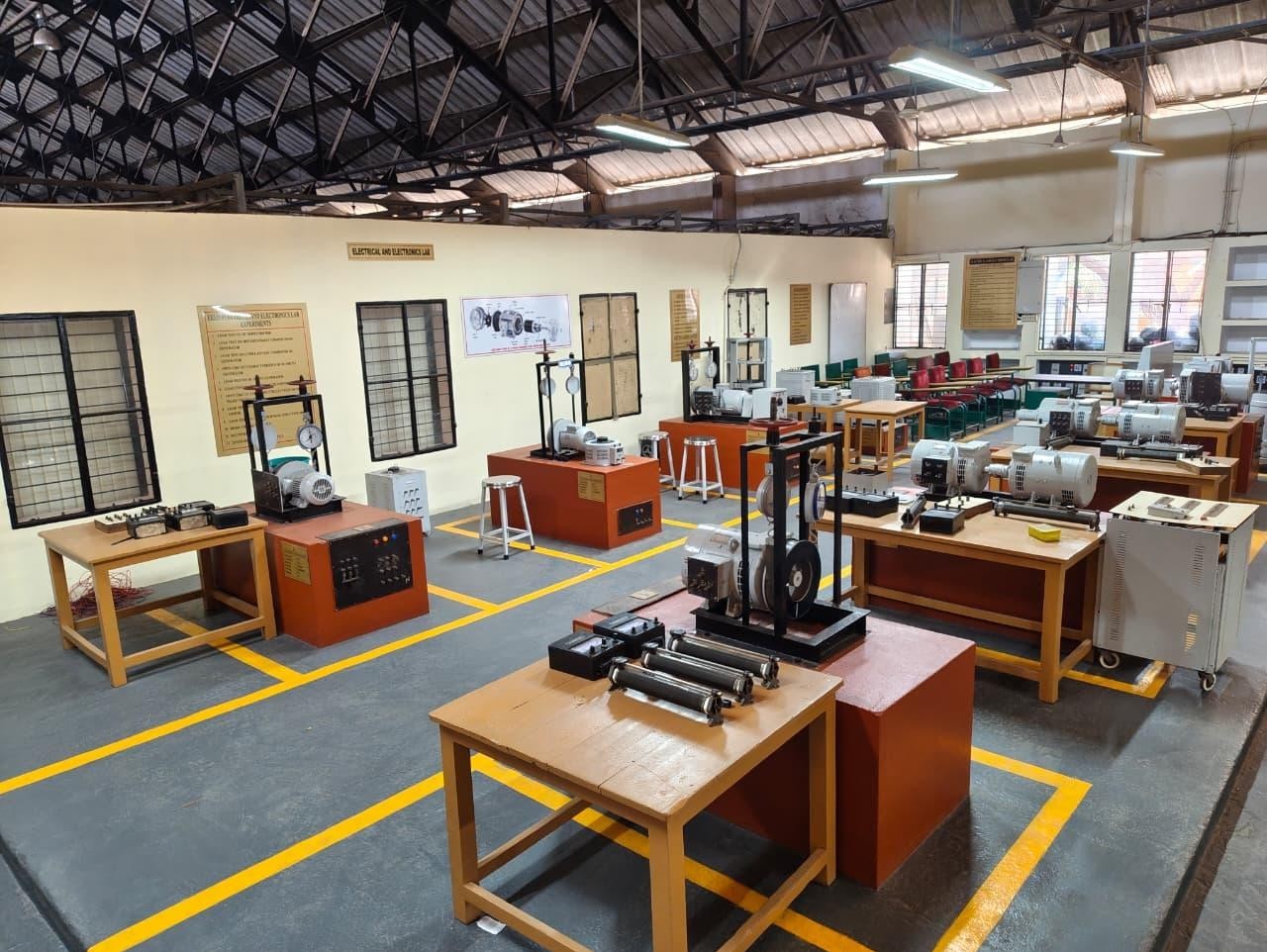
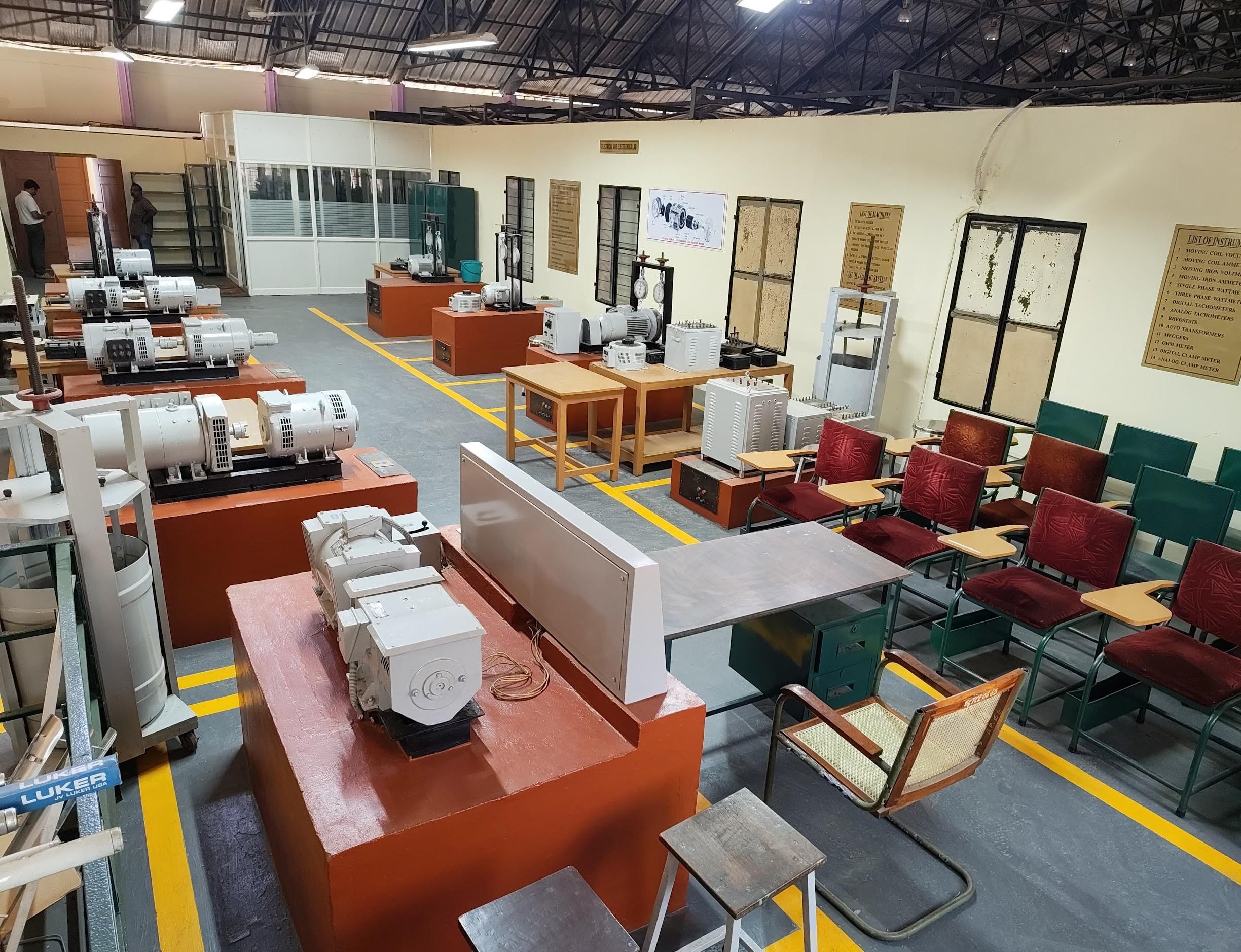
The Electric Systems Lab (MUL 332) under KTU 2019 scheme provides hands-on experience with electrical machines (DC motors, induction/synchronous motors, transformers), performance characteristics, efficiency, losses, and control. It includes power system analysis (load flow, faults, stability, simulation), protective devices, relays, insulation/earthing testing, and measurement techniques, blending hardware experiments with software tools for real-world electrical engineering applications.
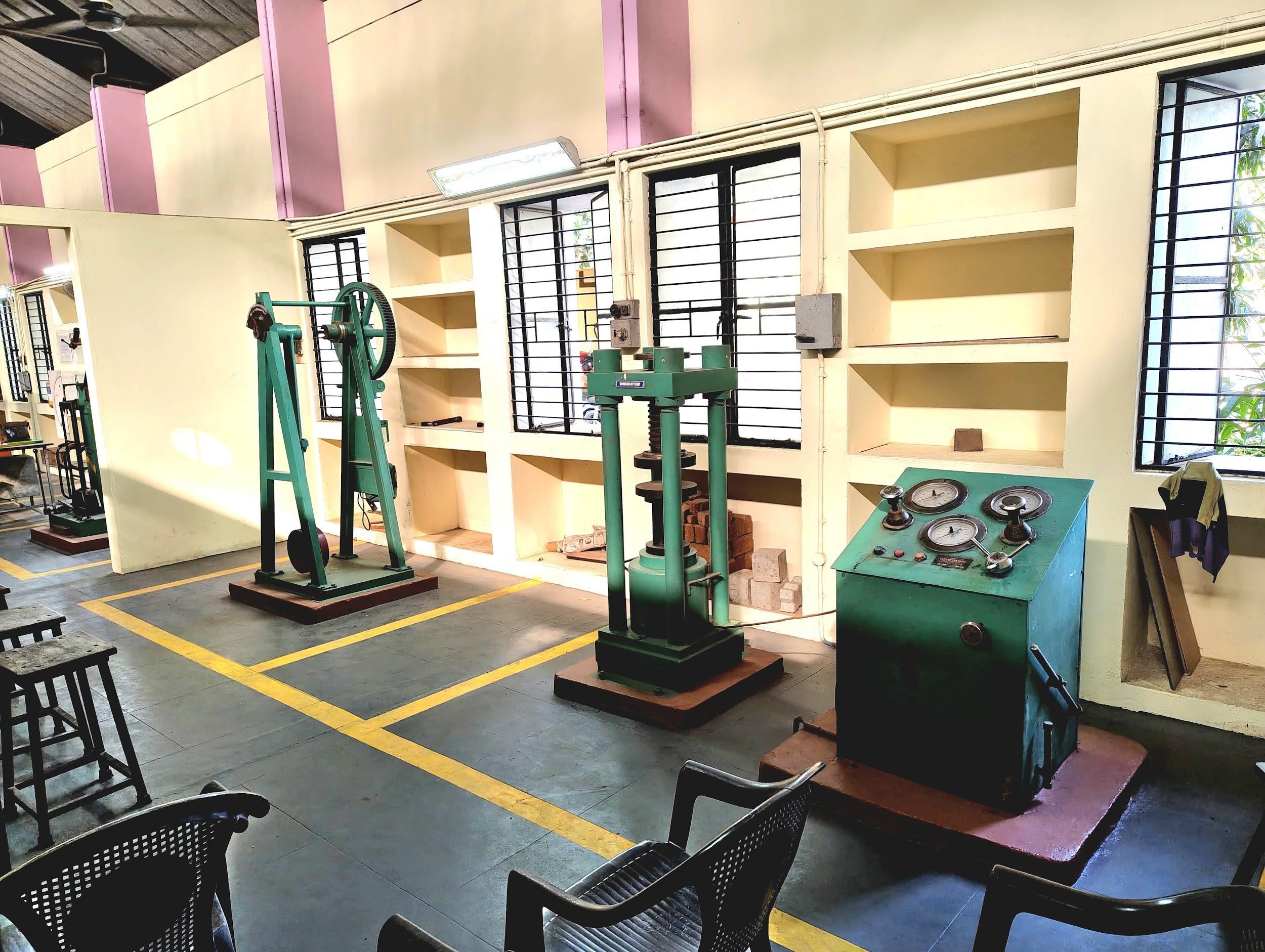
12) Materials Testing Lab
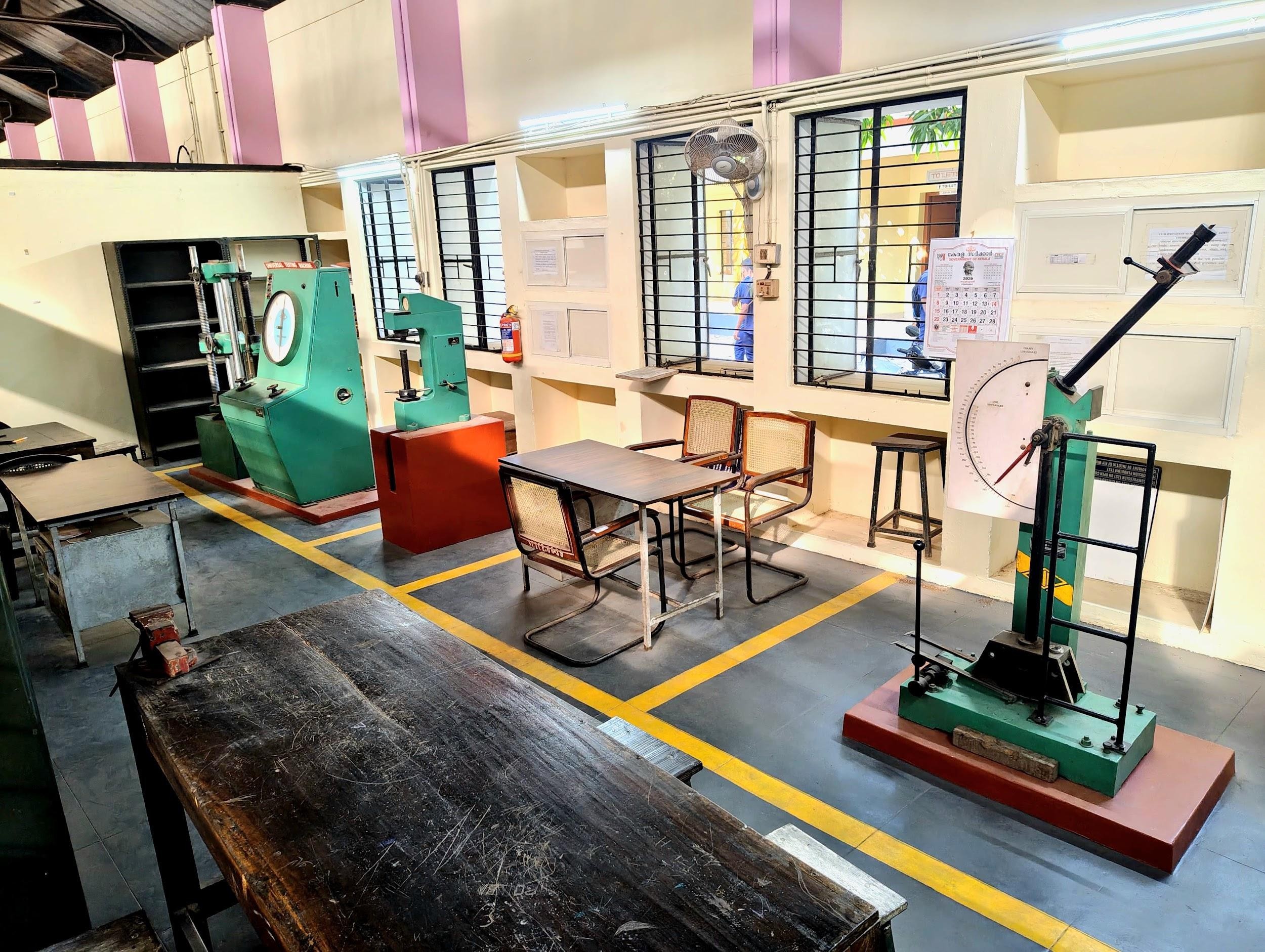
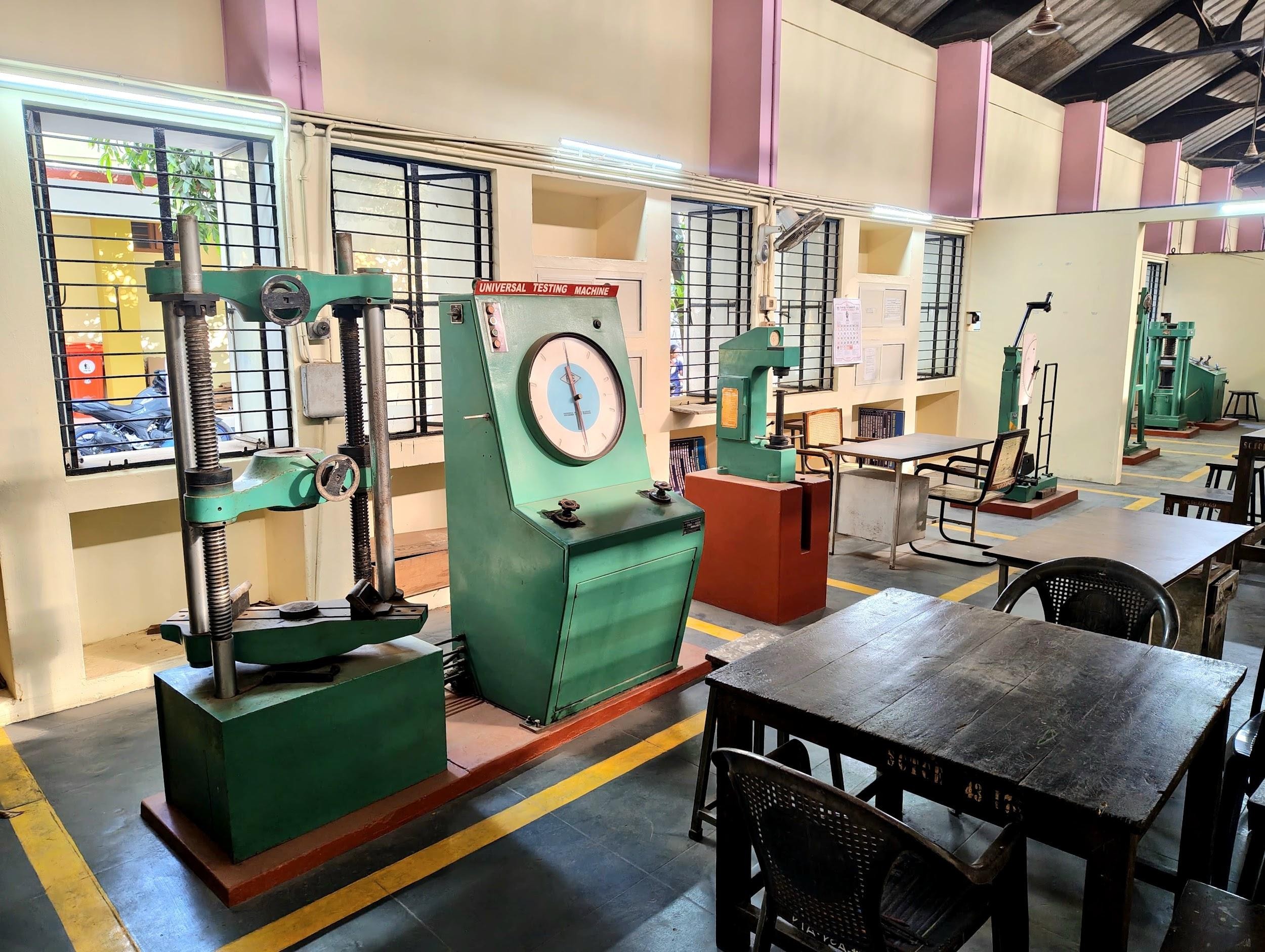
Students perform tensile, compression, shear, bending, impact, hardness, and torsion tests to evaluate mechanical properties and behavior of engineering materials. The lab emphasizes equipment usage, safety, result interpretation, and correlation with theory to build expertise in material selection, quality control, and structural reliability for design and industrial use.
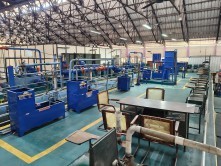
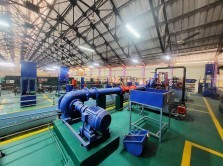
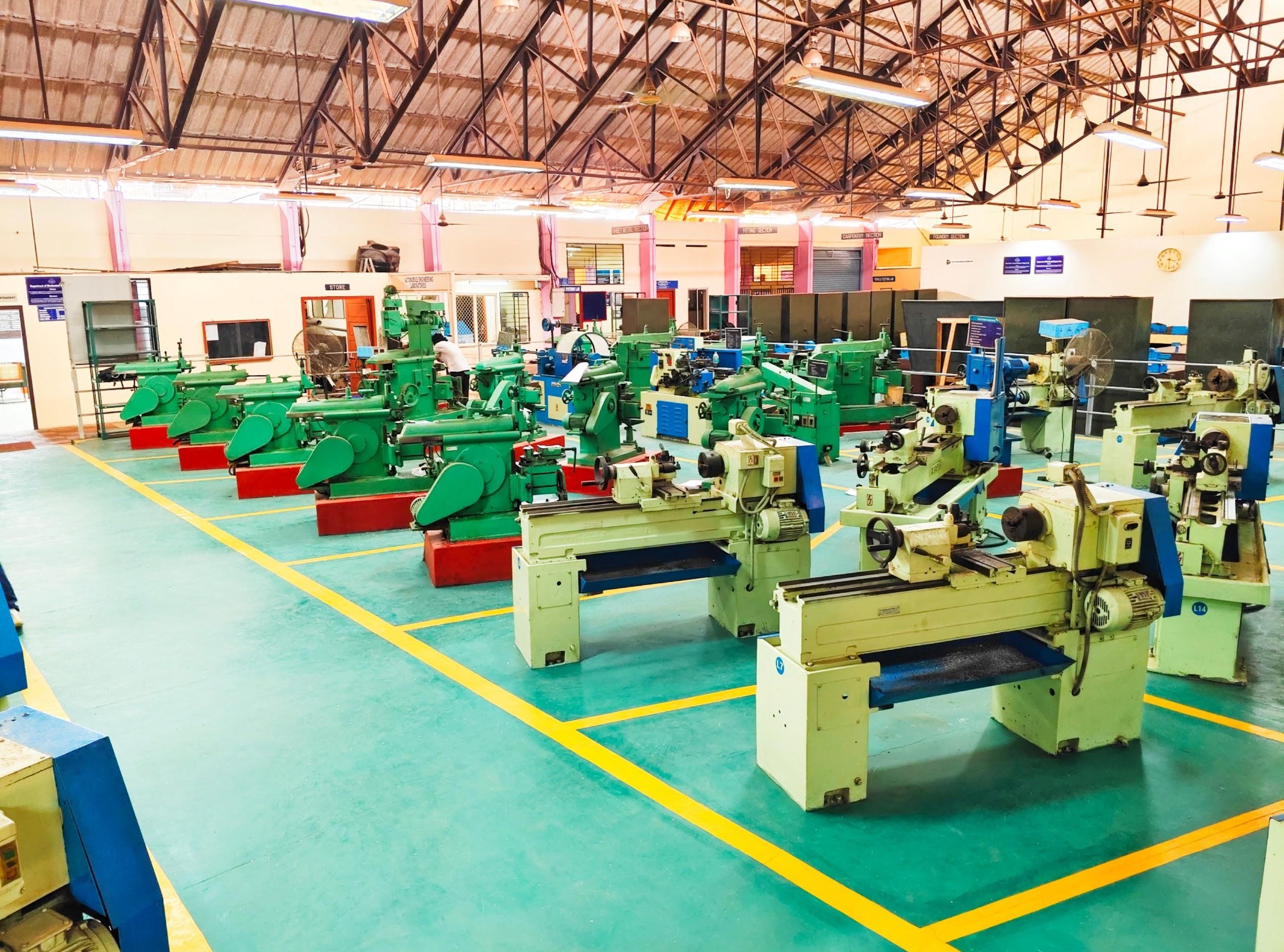
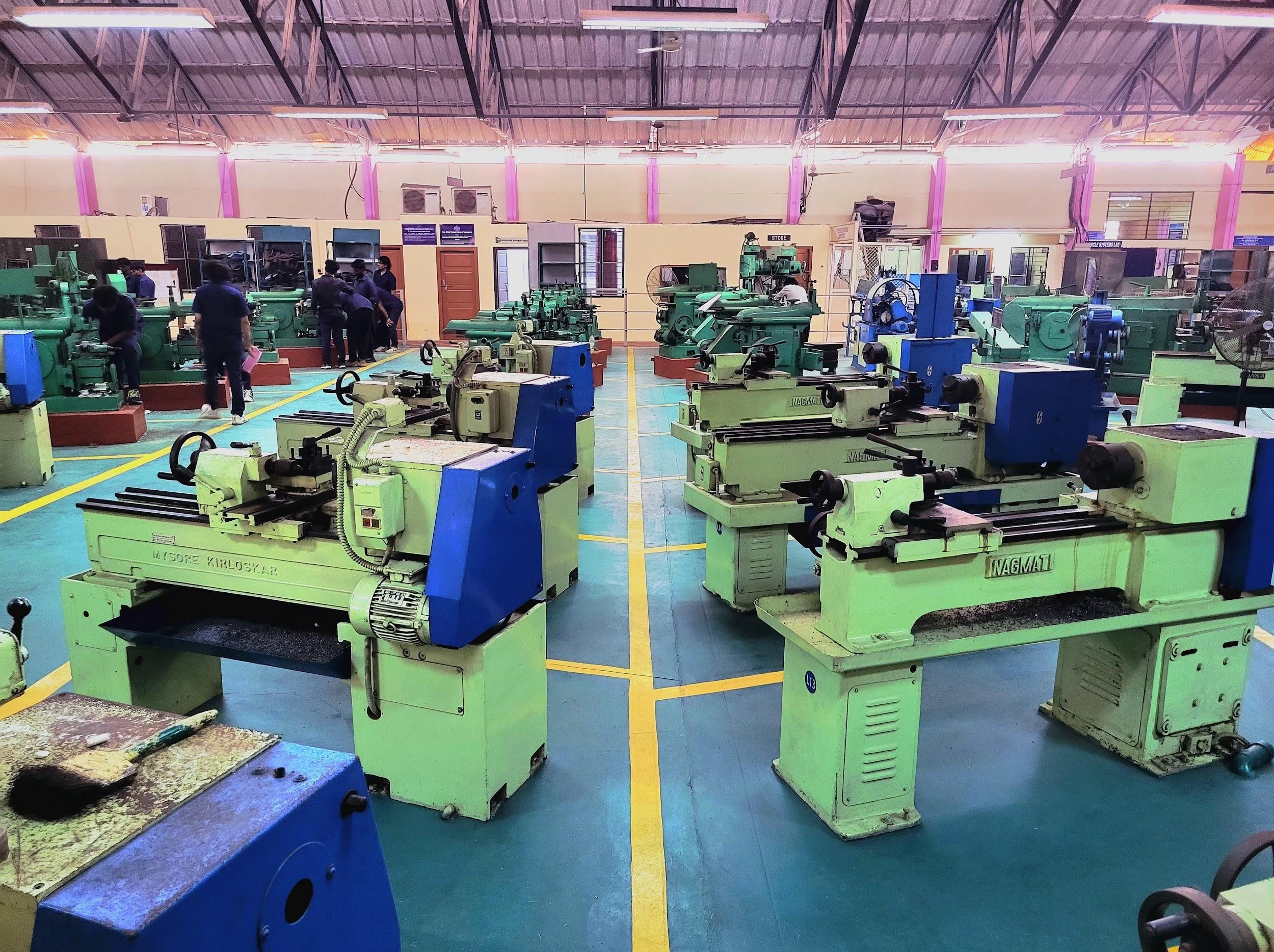
Production Engineering Lab
This lab provides practical training in manufacturing processes and material behavior evaluation under various loading conditions, including tensile, compression, shear, bending, impact, hardness, and torsion tests. It reinforces understanding of strength, elasticity, ductility, toughness, hardness, and failure modes, supporting safe equipment use, accurate analysis, and application in production engineering, quality assurance, and design.
ADDITIONAL FACILITIES
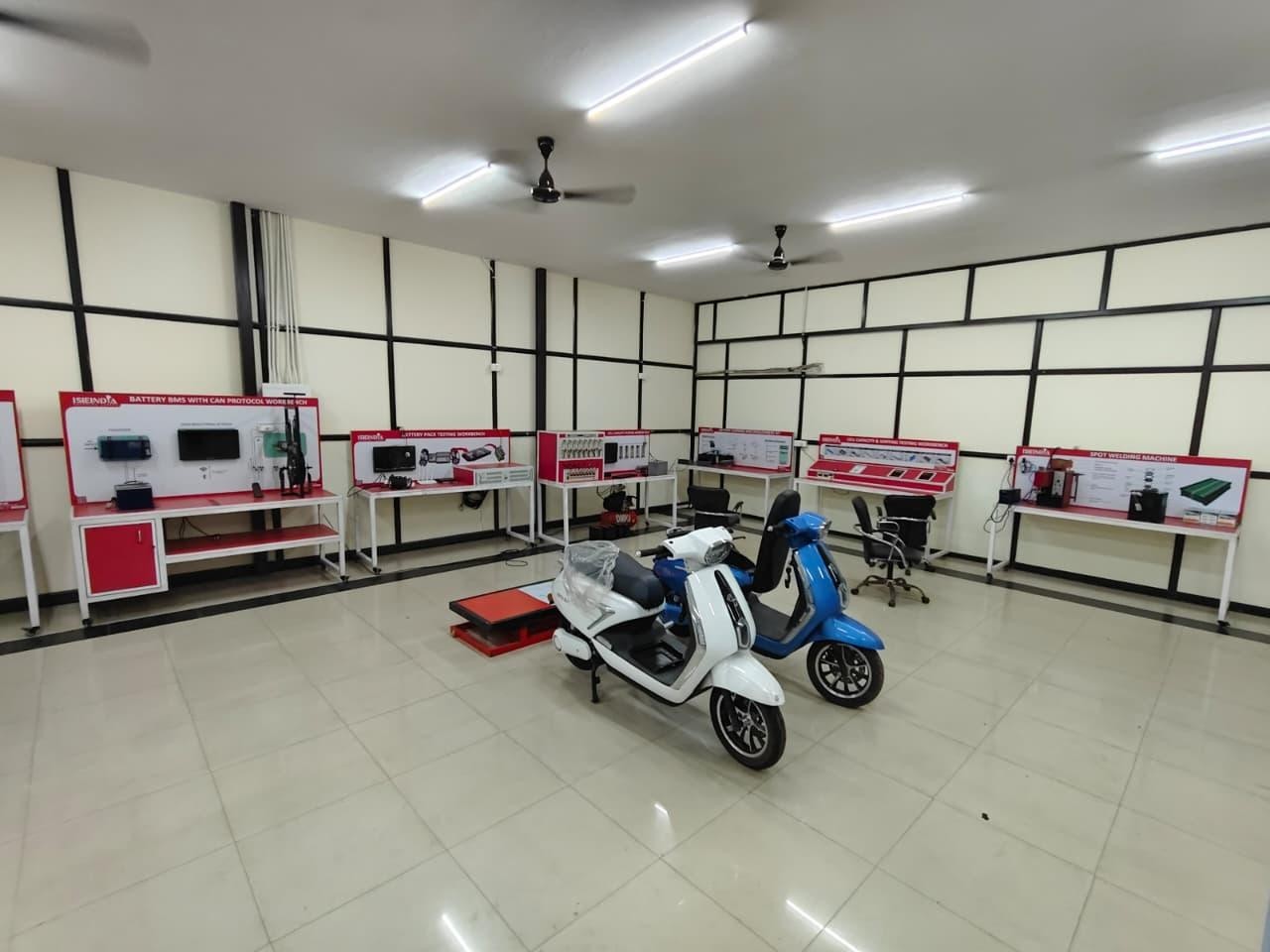
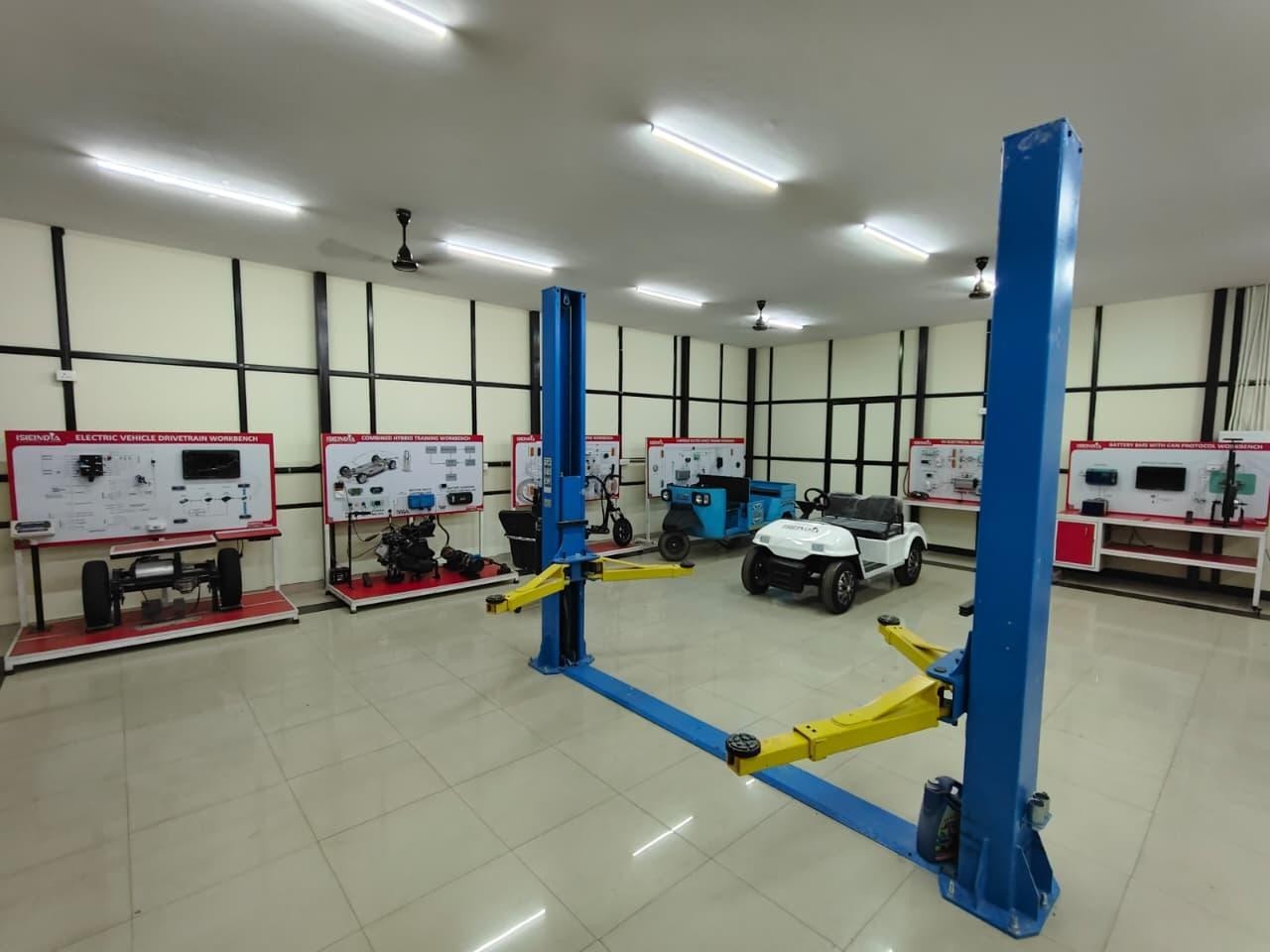
Electric Vehicle and Hybrid Lab
A state-of-the-art multidisciplinary facility for electric mobility, hybrid vehicles, and battery technologies. It features BMS workbenches with CAN communication, battery pack/cell testing and sorting systems, EV drivetrain/hybrid training platforms, electric two-/three-wheeler workbenches, EV electrical circuit trainers, hydraulic lifting, and spot welding machines. Ideal for hands-on learning, projects, and research in EV powertrains, energy storage, power electronics, motor control, and charging systems.
Computational Mechanics Lab
Established in 2012–13, this high-performance facility includes 20 networked workstations, Network Attached Storage (Dell PowerVault), external drives, and Linux-based servers with commercial software (ABAQUS™, HYPERWORKS™) and open-source tools for computationally intensive simulations and analysis in engineering research and consultancy.
Center for Computational Research in Clean Energy Technologies (CCRCET)
Founded in 2013–14 within the Computational Mechanics Lab, CCRCET advances clean energy through high-fidelity modeling using Abaqus, Hyperworks, Pro-E, LAMMPS, ENVI-met, and more. Focus areas include sorption-based hydrogen storage, building energy optimization, phase change materials, and solar thermal/PV technologies. The center produces quality publications, fosters interdisciplinary collaboration, and involves core researchers Dr. Mohan G. (Mechanical) and Dr. Anup V. Thomas (Applied Sciences).
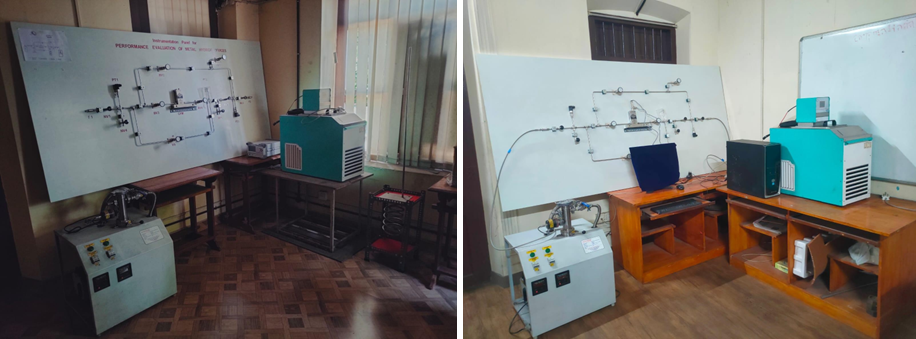
Hydrogen Storage and Sorption Systems Laboratory
Supported by major funded projects (DST–NFTDC for materials/energy storage platforms; AICTE–RPS for metal hydride thermal actuators), this lab focuses on hydrogen storage, sorption cooling, and actuators. Key facilities: high-performance workstations, temperature circulators, data acquisition systems, diffusion vacuum pumps, custom Sieverts apparatus with sensors. It supports design, fabrication, testing, modeling, and simulation of metal hydride-based devices for clean energy applications.